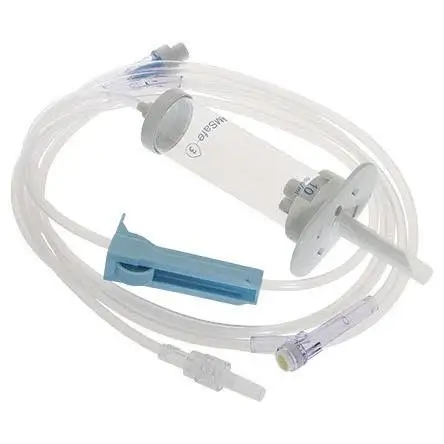
Beyond the basic function of visual flow monitoring, drip chambers come in different designs producing different drop sizes, a distinction with genuine practical significance for accurate flow rate calculation and appropriate application matching across different clinical scenarios.
Understanding the Macrodrip and Microdrip Distinction
Standard administration sets typically fall into one of two broad categories based on their drop factor, the number of drops required to deliver one milliliter of fluid, with macrodrip sets producing larger drops requiring fewer drops per milliliter, commonly around ten to twenty drops depending on the specific product, while microdrip sets produce much smaller drops requiring around sixty drops to deliver the same one milliliter volume.
Clinical Applications Suited to Macrodrip Chambers
A drip chamber with macrodrip specifications generally suits applications requiring larger fluid volumes delivered over shorter time periods, such as many standard adult fluid replacement scenarios, since the larger drop size allows reasonable flow rates without requiring impractically rapid drop counting for flow rate calculation.
When Microdrip Precision Becomes Clinically Important
Microdrip chambers, producing much smaller drops, prove particularly valuable for applications requiring precise control over smaller fluid volumes delivered more slowly, common in pediatric fluid administration, certain medication infusions requiring precise slow delivery, and situations where fluid overload risk makes precise flow rate control particularly clinically important.
Calculating Flow Rate Based on Drop Factor
Accurate manual flow rate calculation depends on correctly applying the specific administration set’s drop factor, since using an incorrect drop factor assumption, whether assuming macrodrip when the set is actually microdrip or vice versa, would result in significantly inaccurate flow rate calculation and potentially clinically significant dosing errors.
Selecting Appropriate Sets for Specific Patient Populations
Healthcare facilities should ensure appropriate availability of both macrodrip and microdrip administration sets, allowing clinical staff to select the appropriate option based on specific patient population needs, such as routinely stocking microdrip sets in pediatric care areas where precise, slower fluid delivery is frequently clinically necessary.
See also: How Technology Is Supporting Better Consumer Experiences
Visual Distinction Between Set Types
Given the clinical importance of correctly identifying drop factor, administration sets typically include clear labeling indicating their specific drop factor specification, making it important for clinical staff to verify this labeling rather than assuming drop factor based on general appearance alone, since visual differences between macrodrip and microdrip chambers may not always be immediately obvious without checking product labeling.
Training on Drop Factor Recognition and Calculation
Clinical education should ensure staff can confidently identify administration set drop factor and correctly apply this information to flow rate calculations, representing a fundamental skill for safe manual IV administration, particularly important in settings where electronic infusion pumps aren’t universally used for all fluid administration.
Conclusion
Understanding the distinction between macrodrip and microdrip chamber specifications, and correctly applying this information to flow rate calculations, represents an important element of safe intravenous fluid administration practice. Healthcare facilities should ensure appropriate availability of both set types matched to their specific patient population needs.
FAQs
Q1: What is the fundamental difference between macrodrip and microdrip administration sets? Macrodrip sets produce larger drops requiring fewer drops per milliliter, typically ten to twenty, while microdrip sets produce much smaller drops requiring around sixty drops per milliliter.
Q2: When is microdrip chamber precision particularly clinically important? Common applications include pediatric fluid administration, medications requiring precise slow delivery, and situations where fluid overload risk makes precise flow control particularly important.
Q3: Why must clinical staff verify drop factor labeling rather than assuming based on appearance? Using an incorrect drop factor assumption for flow rate calculation could result in significantly inaccurate delivery rates and potentially clinically significant dosing errors.