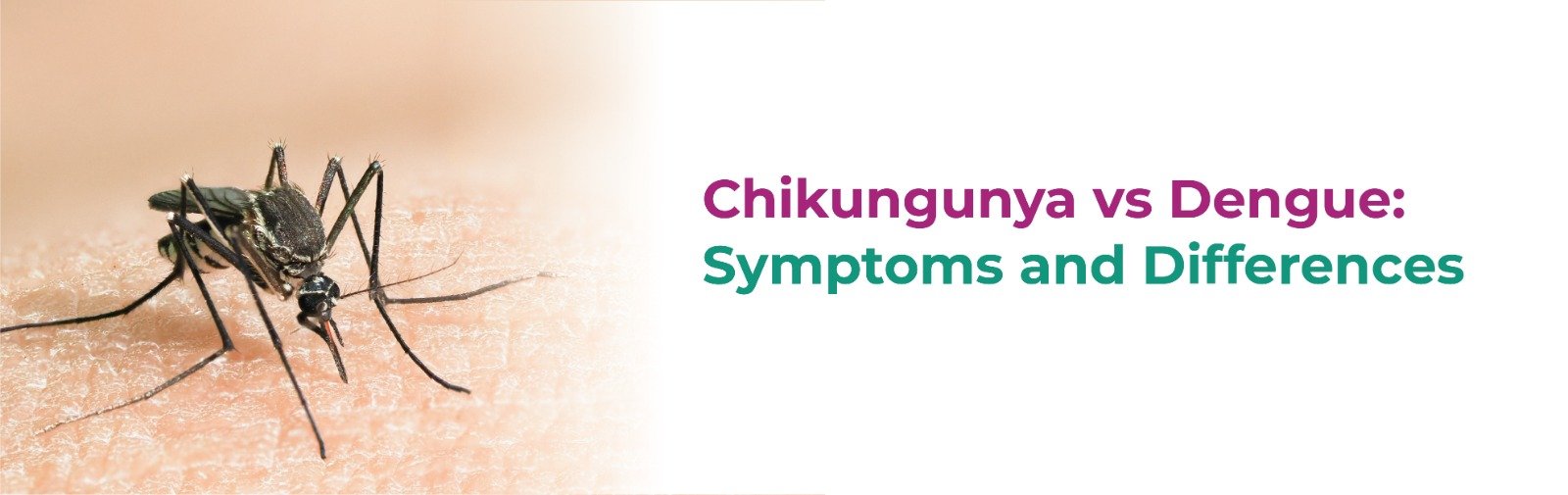
Monsoon season can often feel like mosquito season. It can bring fever, body pain, headache, or even rashes. When these symptoms appear, it’s natural to wonder if it’s dengue, chikungunya, or another viral infection.
Both dengue and chikungunya are viral infections transmitted mainly through the bite of an infected Aedes mosquitoes. They share overlapping symptoms. However, they aren’t the same illness. Understanding the differences between these two can help you identify when it’s time to seek medical advice and consider testing.
To learn more about Chikungunya vs Dengue, keep reading.
Understanding Chikungunya vs Dengue
The biggest difference between the two often comes down to the symptoms. Chikungunya begins with fever and severe joint pain followed by swelling. Other common symptoms include:
- Muscle pain
- Headache
- Rash
- Fatigue
- Nausea
For some people, the fever settles within a few days, but joint pain can continue for weeks or even months.
Dengue, on the other hand, can also cause sudden fever, headache, muscle and joint pain, nausea, vomiting and rash. However, pain behind the eyes is another common symptoms of dengue.
The key difference is that dengue can sometimes lead to serious disease. Warning signs can include:
- Severe abdominal pain
- Persistent vomiting
- Bleeding from the nose or gums
- Blood in vomit or stool
- Unusual tiredness or restlessness.
However, there is considerable overlap. Dengue and chikungunya cannot be diagnosed only on the basis of symptoms. Other infections can also cause similar fever and body pain.
When Should Fever Prompt a Test?
If you have a persistent fever, severe joint pain, extreme body pain, a rash, headache, or other worrying symptoms, consult a doctor to check if testing is required. For dengue and chikungunya, the type of test (antigen, molecular, or antibody) may differ based on the stage of conditions.
Also, if visiting a diagnostic lab feels challenging with high fever, consider testing with LifeCell Diagnostics’ Ayushman Fever Comprehensive Panel. It covers 56 parameters of fever-related infections, including dengue and chikungunya. It also offers the ease of home sample collection. So you can schedule the test online at your convenience at www.lifecell.in.
How Are Chikungunya & Dengue Treated?
There is no specific antiviral medicine to cure dengue or chikungunya. Instead, treatment focuses on managing the symptoms, getting enough rest, and staying hydrated.
If you suspect dengue or chikungunya, it is recommended to avoid self-medication and consult a doctor. Some medicines can increase bleeding risk, especially with dengue.
Also, don’t assume dengue is over just because you start feeling better. It’s warning signs can appear around the time the fever starts to go away. So, keep monitoring your symptoms and seek medical help if they worsen.
Dengue & Chikungunya Prevention
Since both infections spread through infected Aedes mosquitoes, preventing mosquito bites is one of the best ways to reduce your risk. You can
- Use mosquito repellent.
- Wear clothes that cover exposed skin.
- Use window screens or mosquito nets where needed.
- Remove stagnant water around your home.
- Keep water containers covered.
Conclusion
Now that you know more about Chikungunya vs Dengue, you know that similar symptoms don’t always mean the same infection. The next time you experience a fever during the monsoon season, don’t automatically assume it’s just another viral fever. Pay close attention to your symptoms and how they evolve. If the symptoms persist or worsen, always consult your doctor and get tested if recommended. Being aware of the symptoms can help you know when it’s time to stop guessing and seek medical advice.