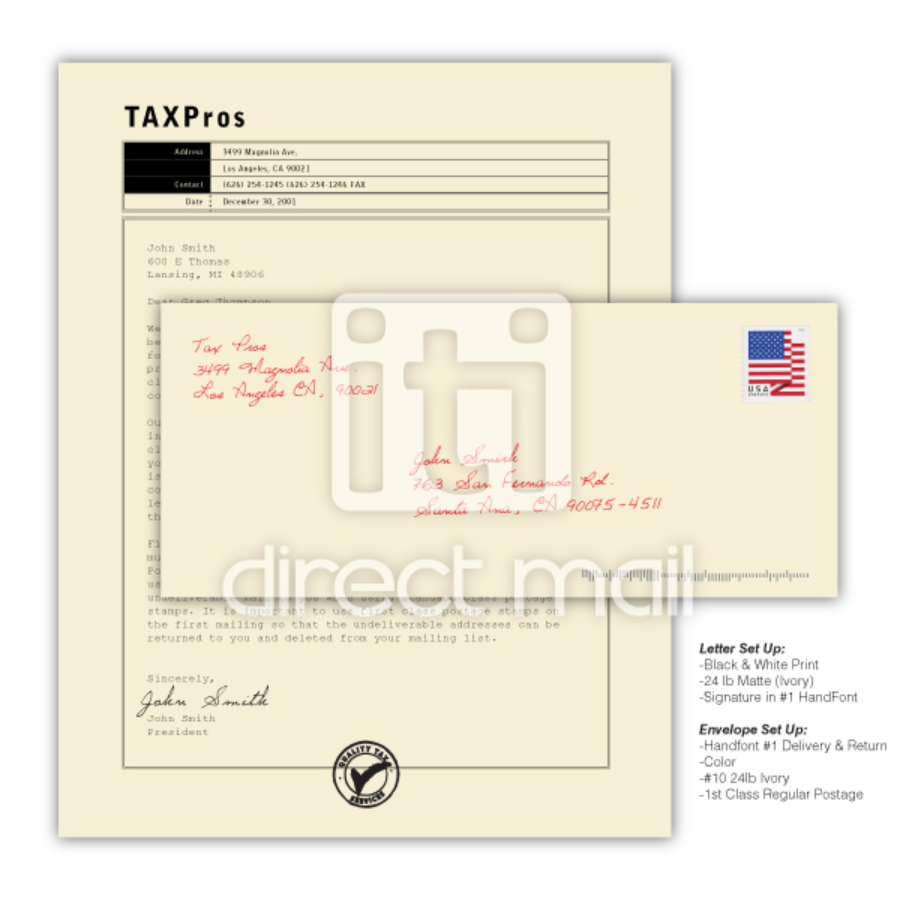
Choosing the right printing partner can shape the quality, consistency, and reach of a direct mail campaign. The best direct mail printing companies combine dependable print quality, efficient production, accurate mailing support, and the capacity to handle campaigns of different sizes. For businesses working with iti Direct Mail, evaluating these factors before selecting a provider can help ensure that every piece reaches recipients as intended and represents the brand professionally.
Start With the Type of Mail You Need
A printing company should match the format and purpose of your campaign rather than simply offer a general printing service. A postcard campaign, promotional flyer, catalog, personalized letter, and multi-piece mailing can require different equipment, finishing methods, paper stocks, and handling processes.
Begin by defining what the campaign needs to accomplish. A real estate business may need highly visual postcards, while a professional service company may rely on a carefully written direct mail letter. Retail campaigns may require promotional mailers with strong imagery, while nonprofit organizations may need personalized letters and reply materials.
The provider should be able to explain which printing specifications fit your format. Ask about paper options, print quality, color consistency, finishing, variable data printing, folding, inserting, and addressing. Clear answers at this stage make it easier to compare providers based on actual campaign requirements.
Assess Print Quality Before Committing
A direct mail piece represents your organization before the recipient reads a single word. Poor image reproduction, uneven color, weak paper, blurred text, or inaccurate finishing can reduce the perceived quality of the entire campaign.
Ask prospective providers for physical samples that resemble your planned mailing. Digital samples can show layout and design, but physical samples provide a better sense of paper weight, coating, texture, folding, trimming, and overall presentation.
Pay close attention to small details. Text should remain sharp, images should reproduce cleanly, and colors should appear consistent across the printed material. If your brand uses specific colors, ask how the printer maintains color accuracy across larger production runs.
Quality also depends on how well the printer handles variable information. Personalized names, addresses, offers, or other recipient-specific details must be positioned correctly. A small data or alignment error can make an otherwise polished campaign look careless.
Examine Their Production Capabilities
Campaign size can change the production requirements considerably. A provider suitable for a small targeted mailing may not have the equipment, workflow, or staffing required for a much larger campaign.
Look at the printer’s production capabilities rather than focusing only on the basic printing process. Ask about digital and offset printing, variable data capabilities, finishing equipment, folding, inserting, addressing, and mail preparation.
A capable provider should also be able to explain how different stages connect. Printing, finishing, personalization, and mailing need to work together so that the final pieces remain accurate and consistent.
Three areas deserve particular attention:
- Personalization: Check that the provider can manage variable names, addresses, offers, images, or other campaign data accurately.
- Finishing: Confirm that folding, trimming, perforation, coating, and other finishing requirements are available for your format.
- Mail preparation: Ask how addresses, sorting, bundling, and other mailing requirements are handled before pieces enter the postal system.
Look Beyond Printing Services
Printing is only one part of a direct mail campaign. Businesses often need support with data preparation, personalization, addressing, inserting, sorting, and delivery coordination.
This makes direct mail printing services that include mailing-related capabilities particularly useful for campaigns with several moving parts. Having related processes managed through one provider can reduce the number of handoffs and make responsibility easier to track.
Ask exactly which services are performed in-house and which are handled by outside partners. The answer can tell you how much control the provider has over quality and production coordination.
For businesses that send different formats throughout the year, direct mailer services can also provide useful flexibility. A provider familiar with postcards, letters, brochures, catalogs, and other formats can make it easier to maintain consistency across campaigns without changing suppliers for every project.
Check Data Handling and Personalization
Data accuracy deserves as much attention as print quality. A beautifully produced mailer can still fail if it contains incorrect names, incomplete addresses, duplicate records, or poorly formatted variable information.
Ask how the provider receives, processes, validates, and protects campaign data. You should understand what file formats they accept, how records are checked, and how personalized information is matched with each printed piece.
For campaigns using customer lists, segmentation can also affect production. Different audiences may receive different messages, images, offers, or calls to action. The printer should be able to explain how these variations are managed without creating confusion during production.
Proofing is another useful safeguard. Before the full campaign moves forward, review representative proofs and verify names, addresses, offers, images, colors, and other variable elements.
Consider Mailing and Fulfillment Support
A printer can produce excellent materials but still be a poor fit if mailing requirements are outside its area of expertise. Ask how the company handles addressing, sorting, bundling, inserting, and preparation for postal delivery.
For campaigns involving letters, this becomes especially relevant because several components may need to be assembled correctly. A direct mail letter may be paired with an envelope, response card, brochure, coupon, or other insert. Each item needs to be matched and assembled accurately.
Fulfillment support can also matter for campaigns containing multiple versions. Different audience segments may require different inserts or messages. A provider with appropriate fulfillment capabilities should be able to explain how these variations are separated, assembled, checked, and prepared for mailing.
Review Quality Control Procedures
Strong quality control should be visible throughout the production process, not only after printing is complete.
Ask how the provider checks artwork, variable data, print output, finishing, addresses, and assembled mail pieces. Find out who reviews proofs and how production errors are identified before a campaign progresses.
You can also ask how the company handles a problem discovered during production. A clear correction process is a useful sign that the provider takes accountability seriously.
Look for consistency across samples and previous work. If the company can demonstrate reliable handling of different formats and personalization requirements, that provides more useful evidence than broad claims about service quality.
See also: Top Reasons to Hire Bus Accident Lawyers After a Serious Collision
Match the Provider to Your Campaign Scale
Campaign scale is not simply about producing a large quantity of mail. It also involves managing data, artwork versions, personalization, finishing, packaging, and mailing requirements without compromising accuracy.
A provider should have enough production capacity to handle your current needs while supporting changes in campaign volume. This matters for organizations that may start with targeted geographic campaigns and later expand their mailing lists or introduce additional formats.
At the same time, a large production operation is not automatically the right choice. Smaller campaigns may benefit from a provider that gives closer attention to specialized formats or personalized requirements.
The better question is how well the provider’s capabilities match your campaign structure. Ask about similar formats, data requirements, personalization needs, and production complexity rather than judging capacity by equipment alone.
Evaluate Communication and Project Management
Good communication can prevent avoidable production problems. Your printing partner should provide clear instructions for submitting artwork and data, explain proofing requirements, and identify information needed before production begins.
Pay attention to how clearly the provider answers technical questions. If explanations are vague or responsibilities are unclear during the selection process, campaign coordination may become difficult later.
A useful provider should make it clear who handles artwork approval, data preparation, proof review, printing, finishing, fulfillment, and mailing. Defined responsibilities create a smoother workflow and make it easier to identify the right person when a question arises.
Choose Based on Consistency, Not Just Capacity
A printer’s ability to produce one impressive sample does not tell you everything. Consistency matters across the entire campaign, particularly when multiple versions, audience segments, or formats are involved.
Review examples that demonstrate different production requirements. Ask how the provider maintains consistency across repeat campaigns and how changes in artwork or data are managed.
For businesses using direct mailers for business, this consistency can help maintain a recognizable brand presentation across different campaigns. The same standards should carry through from a single targeted mailing to a broader campaign involving several formats and audience groups.
iti Direct Mail can be evaluated using these same practical criteria. Looking closely at print quality, production capabilities, personalization, fulfillment, communication, and campaign capacity gives businesses a clearer basis for choosing a provider.
Build a Clear Selection Checklist
Before making a final decision, compare providers against the requirements that matter most to your campaign. A simple checklist can prevent an attractive sample or broad service description from overshadowing important operational details.
Consider the quality of physical samples, available print formats, personalization capabilities, data handling, finishing options, mailing support, quality control, production capacity, and communication process.
Your selection should reflect the actual campaign rather than a generic list of services. A provider that understands your format, audience, data, and mailing requirements is more likely to deliver a consistent finished product.
Make the Printer Part of the Campaign Plan
The printer should be considered during campaign planning, not only after the design has been completed. Production limitations can affect paper selection, dimensions, personalization, finishing, and mailing preparation.
Bringing the printing partner into the process early can help identify practical issues before artwork and data are finalized. It also creates an opportunity to confirm that the planned format can move smoothly from design to production and mailing.
The right provider is not simply the company that prints the most pieces. It is the one whose quality standards, production capabilities, data processes, fulfillment support, and communication fit the demands of your campaign.
If you need help planning your next direct mail campaign, connect with us today to discuss the format, audience, and production requirements that matter most to your business. A thoughtful selection process gives your mail a stronger foundation from the first printed sheet to the final delivery. Review samples, ask specific production questions, verify personalization and mailing capabilities, and choose a provider that can maintain accuracy across your campaign.