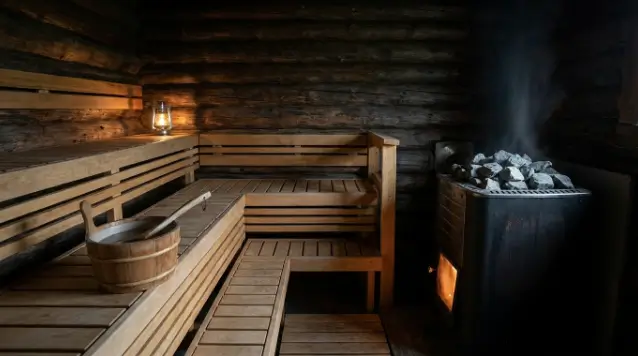
A fully installed two to four person traditional sauna typically runs $6,000 to $10,500, and the unit itself is usually well under half of that figure. The rest comes from the heater, a dedicated 240-volt electrical circuit, a pad or foundation, and delivery, all of which get left off the number printed on a product listing. Buyers who budget from the sticker price alone are the ones most likely to run short partway through a project.
What Does the Sauna Unit Itself Cost?
The cabin alone, meaning the walls, roof, benches, and door with no heater or electrical included, generally runs $2,500 to $5,500 for a two to four person prefab kit depending on wood species. Cedar sits at the top of that range, thermally modified hemlock nearer the bottom, and Nordic spruce in between. Larger six-person cabins push past $6,000 for the structure alone before anything else is added. This is the number most listings lead with, and it is the one most likely to mislead a first-time buyer comparing prices across sellers without checking what each price actually includes.
What Does the Heater Add?
Heaters are sometimes bundled into the cabin price and sometimes sold separately, so this is the first thing to confirm on any listing. An electric heater sized correctly for a two to four person cabin generally costs $600 to $1,800 depending on kilowatt rating and brand. Wood-fired heaters run somewhat less for the unit itself, often $400 to $900, but require a chimney and hearth pad that usually cost more than the electric alternative’s dedicated circuit. Either way, treat the heater as its own line item rather than assuming it rides along with the cabin price for free.
What Does Electrical Work Add to the Total?
This is the cost buyers underestimate most consistently. Most heaters above 6 kilowatts need a dedicated 240-volt circuit, which runs $800 to $2,500 depending on how far the cabin sits from the electrical panel and whether the panel has open capacity. A short run to a panel with room to spare sits at the low end. A long run, a full panel upgrade, or a permit and inspection requirement in a stricter jurisdiction pushes toward the high end fast. Getting a firm electrician’s quote before ordering the heater, not after the cabin arrives, avoids the most common source of a blown budget on this kind of project.
What Does Site Prep and Delivery Add?
Outdoor cabins need a level, stable base, usually a gravel or concrete pad, which runs $300 to $1,200 depending on size and whether the ground needs grading first. Delivery charges vary widely by distance and whether the seller includes basic placement in the price, typically $150 to $600 for a standard residential delivery. Indoor installs skip the pad but often need a vapor barrier and ventilation fan added to the room, which is a comparable cost in a different form. None of this shows up on the cabin’s advertised price, which is exactly why the true installed total runs so far past the number on the box.
So What Does a Realistic Budget Actually Look Like?
Adding it up: a $3,500 cabin, a $1,000 electric heater, a $1,500 electrical run, and a $600 pad lands at $6,600 before delivery, which is a fairly typical middle-of-the-road total for a two to four person outdoor unit. A tighter budget can land closer to $6,000 by choosing heat-treated hemlock over cedar and keeping the electrical run short. A nicer build with cedar, a larger heater, and a longer electrical run can just as easily land near $10,500. Comparing full model specs side by side, rather than shopping on price alone, is the fastest way to see where a given seller’s number actually falls. Retailers such as SweatDecks’ lineup break out wood species and heater rating per model, which makes it possible to line up a true apples-to-apples total instead of guessing what a bare price includes.
What Does It Cost to Actually Run, After Installation?
The installed total is not the last number worth budgeting for. An electric heater sized for a two to four person cabin draws roughly 5 to 6 kilowatts while running, and a typical hour-long session with preheating uses somewhere around 5 to 8 kilowatt-hours depending on outdoor temperature and how well the cabin holds heat. At a common residential electricity rate, that works out to a dollar or two per session for most households, which adds up to a modest but real monthly cost for anyone using the sauna several times a week. Wood-fired units trade that ongoing electric cost for the price of firewood and the time spent tending the fire, which is worth weighing against a household’s actual schedule rather than assumed to be free just because there is no meter attached to it. Basic upkeep, mainly the occasional bench sanding and replacing heater stones every couple of years, adds a small but predictable cost on top of either fuel type.
Is the Spend Actually Worth It? What the Research Shows
The case for spending the money rests on regular use, and there is a real body of evidence behind that. A large Finnish cohort study found that men who used a sauna four to seven times a week had lower rates of fatal cardiovascular events and all-cause mortality than men who used one only once a week, an association that held after controlling for other risk factors. A 2018 review in Mayo Clinic Proceedings summarized similar cardiovascular associations across a range of studies, including effects on vascular function. A separate study in Heart and Vessels measured changes in blood-based cardiovascular markers among regular sauna users following a session. These are population-level associations, not proof of benefit for any one household, and they say nothing about whether a $6,000 unit or a $10,500 one is the better buy. What they do support is that a cabin sized and priced to fit actual weekly use, rather than one bought to impress guests twice a year, is where the value of the spend actually shows up.
See also: Top Reasons to Hire Bus Accident Lawyers After a Serious Collision
Frequently Asked Questions
What does a traditional sauna cost fully installed? A two to four person outdoor cabin with an electric heater, delivery, and a new dedicated circuit typically totals $6,000 to $10,500.
Is the heater included in the sauna’s listed price? Sometimes, but not always. Confirm whether a listed price includes the heater before comparing sellers, since separate heaters can add $600 to $1,800.
How much should electrical work realistically add to the budget? Plan for $800 to $2,500 for a dedicated 240-volt circuit, depending on distance from the panel and available capacity.
Does a lower sticker price usually mean a worse sauna? Not necessarily, but check wood species and heater wattage closely. A vague listing without those details is a more reliable warning sign than price alone.
References
- Association between sauna bathing and fatal cardiovascular and all-cause mortality events, JAMA Internal Medicine, 2015
- Cardiovascular and Other Health Benefits of Sauna Bathing: A Review of the Evidence, Mayo Clinic Proceedings, 2018
- Short-term effects of Finnish sauna bathing on blood-based markers of cardiovascular function in non-naive sauna users, Heart and Vessels, 2018
By Greg Sutter